
An AI wearable ring gives you many of the same health and activity insights as a smartwatch but in a much smaller, more comfortable form factor. For people who care about sleep, stress, or subtle everyday tracking, the ring form often fits more naturally into daily life and nighttime routines. Understanding how these devices differ from smartwatches helps you decide which wearable matches your habits, priorities, and budget.
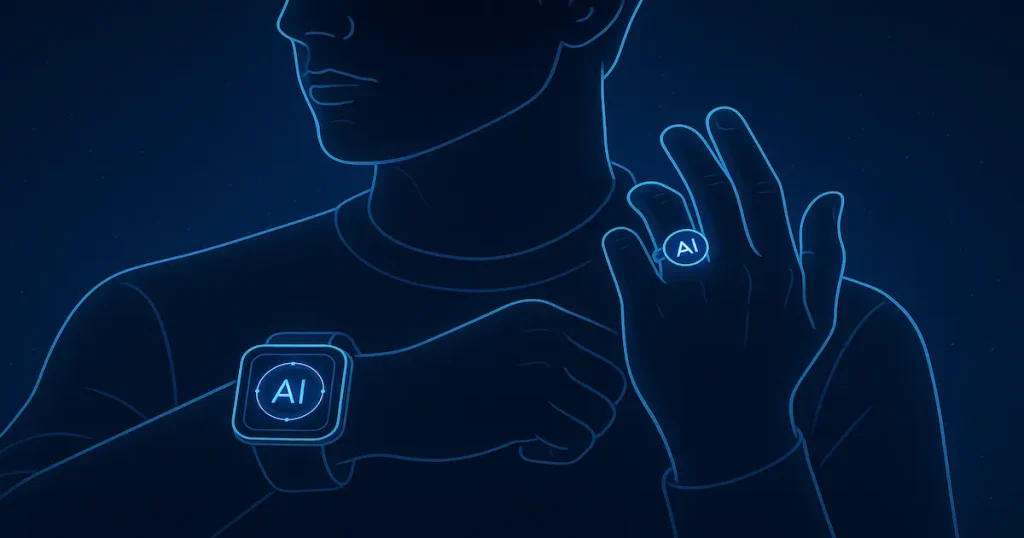
Mandatory Advantages Of An AI Wearable Ring
Mandatory advantages of an AI wearable ring start with how naturally a ring fits into daily routines compared with a wrist device. Many users find rings easier to wear around the clock because they are lightweight, slim, and designed to feel like regular jewelry rather than tech. That comfort translates into more consistent use, which improves the quality of long-term health and sleep data. Rings also skip the bright screens and constant notifications that can make smartwatches distracting or socially intrusive. When you want health insights without broadcasting that you are wearing a gadget, a subtle ring can be a better match.
Health And Sleep Tracking Strengths
AI wearable ring advantages are especially clear in sleep and recovery tracking. Rings sit on the finger, close to blood vessels, which helps them measure signals like heart rate and temperature changes reliably through the night. Many models focus on metrics such as heart rate variability, resting heart rate, sleep duration, and sleep stages to estimate how well your body is recovering. Because rings are less obtrusive than watches, people are more likely to keep them on while sleeping, leading to more complete data over time. Smartwatches can offer advanced metrics too, but some users report that size, weight, or straps make them less comfortable to wear in bed.
Daily Readiness And Recovery Scores
AI wearable ring advantages include compact insights such as daily readiness or recovery scores that summarize complex data into a simple number. These scores often blend sleep quality, recent activity, and resting physiology to suggest whether you should push harder or dial back for the day. This approach can help you connect how your choices around bedtime, training, or stress management affect how you feel the next morning.
Stress And Mood Awareness
AI wearable ring advantages also show up in stress awareness by monitoring patterns in heart rate variability, skin temperature, or breathing rate. Some ring ecosystems turn these patterns into prompts that nudge you toward short breaks, breathing exercises, or other calming habits when your body signals strain. Over time, those subtle alerts can make it easier to notice early signs of burnout instead of reacting only when you already feel overwhelmed.
Activity And Everyday Movement
AI wearable ring advantages cover everyday movement, even if rings often feel more health-first than sport-watch-like. Most smart rings track steps, basic workouts, and overall activity time well enough for general fitness and habit-building. If you are training for races or need detailed on-wrist metrics such as pace, maps, or live coaching, a smartwatch may still be stronger, but many people do not need that level of detail daily.
Battery Life, Charging, And Convenience
AI wearable ring advantages become obvious when you look at how often you need to charge the device. Many smart rings run for around 4–10 days on a single charge because they use low-power components and have no large display. In contrast, a lot of smartwatches still need charging roughly every one to two days, especially if you enable features like bright screens, GPS, or continuous notifications. Needing fewer charging sessions means fewer gaps in your sleep and health data and less chance of forgetting the device on a charger. For people who prefer “set it and forget it” tracking, this difference alone can make rings feel more convenient than watches.
Battery And Wearability Comparison Table
| Aspect | Typical AI Wearable Ring | Typical Smartwatch |
|---|---|---|
| Form Factor | Small, lightweight ring that looks like regular jewelry. | Larger device on the wrist with a visible screen and strap. |
| Comfort For Sleep | Often rated as more comfortable and less intrusive for nighttime wear. | Some users notice bulk or strap pressure during sleep. |
| Battery Life | Commonly around 4–10 days per charge, depending on model and usage. | Often around 1–3 days per charge with continuous tracking. |
| Screen And Notifications | No or minimal display; relies on app for details, fewer distractions. | Full screen for apps and notifications, more chances for distraction. |
| Health Focus | Strong emphasis on sleep, stress, and recovery metrics. | Mix of health tracking with apps, messages, and productivity features. |
Discreet Design And Everyday Style
AI wearable ring advantages extend into style and social comfort. Smart rings are designed to look like regular bands, often using materials such as titanium or ceramic that blend with both casual and professional outfits. That makes them appealing for people who do not want visible tech on their wrist in client meetings, formal events, or photos. Because a ring takes up less visual space, it also pairs well if you prefer to keep wearing a classic analog watch on your wrist. Smartwatches can still look polished, but the always-present screen signals “gadget” in a way that rings usually avoid.
Data, Apps, And Ecosystem Differences
AI wearable ring advantages rely heavily on the companion app that turns raw sensor data into insights. Rings usually offload intensive processing and visualizations to your phone, where AI models analyze trends over weeks instead of focusing only on daily numbers. This app-centric approach keeps the ring itself simple and passive while still providing detailed graphs, insights, and suggestions when you open the app. Smartwatches, by contrast, split intelligence between watch and phone so that you can see quick stats, notifications, and sometimes apps directly on your wrist. That can be useful if you want an all-in-one mini computer, but it is not necessary if your main priority is quiet, long-term health tracking.
When A Smartwatch Still Makes Sense
AI wearable ring advantages do not erase the fact that smartwatches remain better fits for some people and use cases. If you need on-screen turn-by-turn navigation, offline music control, contactless payments, or detailed workout metrics, a smartwatch still offers more immediate interaction. Athletes who rely on live pace, lap controls, or safety features like fall detection might find ring-only tracking too limited. People who enjoy using a watch as a productivity hub for calls, messages, and reminders may also prefer the richer interface and app ecosystem. In that sense, rings and watches can complement each other rather than compete, with the ring focusing on health and the watch handling communication.
FAQ
Are AI Wearable Rings More Accurate Than Smartwatches?
Accuracy depends on the specific device, but smart rings can measure certain signals like heart rate and temperature reliably because they sit close to arteries in the finger. Studies show that some ring-based devices track heart rate variability and sleep duration at levels comparable to research-grade tools, though sleep stage estimates still vary by model.
Is An AI Wearable Ring Better For Sleep Tracking?
For many people, an AI wearable ring is easier to wear through the night than a wrist device, which supports more complete sleep tracking. Rings minimize bulk and strap pressure, which can reduce the urge to remove them and lead to more consistent sleep and recovery data.
How Long Does The Battery Of An AI Wearable Ring Last?
Battery life varies by brand, but many AI wearable rings last between about 4 and 10 days on a single charge. This is usually longer than most smartwatches, which often need charging every 1–3 days under continuous tracking.
Can An AI Wearable Ring Replace My Smartwatch?
An AI wearable ring can replace a smartwatch if your main goal is quiet, continuous tracking of sleep, stress, and daily activity rather than on-wrist apps and notifications. If you rely on your watch for messaging, navigation, music, or detailed sports metrics, you may still want to keep or choose a smartwatch.
Are AI Wearable Rings Comfortable To Wear All Day?
Most AI wearable rings are designed to feel like regular jewelry, using smooth, lightweight materials that work for 24/7 wear. Users often report that rings are less noticeable than watches during sleep, workouts, and everyday tasks.
Final Thoughts
AI wearable ring advantages become clear when you look at how comfortably and quietly they fit into everyday life. They excel at long-term health, sleep, and stress tracking thanks to their discreet design, strong battery life, and app-driven AI insights. Smartwatches still make sense for people who want screens, apps, and rich sports features on the wrist, but that extra complexity is not necessary for everyone. For many users, choosing an AI wearable ring over a smartwatch is less about raw feature counts and more about comfort, consistency, and fewer distractions. If you value quiet health insights that stay mostly in the background, an AI wearable ring can be a practical and appealing option.
Sources
VERTU – Smart Rings vs Smartwatches for Health Tracking (2025)
RingConn – What Is the Real Point of a Smart Ring? (2025)
WellnessPulse – What Is a Smart Ring and How Do They Support Your Health? (2025)
RENPHO – Top Reasons to Choose a Smart Ring Over a Smartwatch in 2025 (2025)
AI disclosure: This article was created with the assistance of artificial intelligence and reviewed and edited by the editorial team. The accompanying image was also generated using artificial intelligence.


