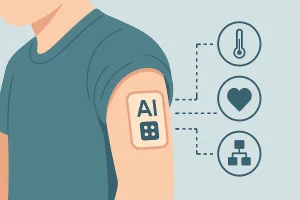
Stress and focus feel very personal, but more people now wear devices that try to measure and improve both during normal days. This article looks at what these devices really do, where they help, and where they mainly add more numbers to your life. The tone stays calm on purpose, because stress tools that create panic are not very useful. The goal is simple: help you decide if a smart assistant on your wrist fits your habits and expectations, or if it is just one more thing to check every hour.

How An AI Wearable Tries To Read Stress
Modern stress‑tracking wristbands and watches combine simple sensors like heart rate, heart rate variability and skin conductance with machine‑learning models that classify moments as relaxed, normal or stressed. A large review of stress detection in students found that these models can pick up patterns from heart and skin signals reasonably well, but results vary a lot between devices and studies. In practice this means your watch can often detect clear spikes, like public speaking or a hard meeting, but subtle mood shifts are harder.
Real‑world trials show that algorithms trained in lab conditions do not always keep the same accuracy when people move, sweat, drink coffee or commute in cold weather. Some validation work on wrist sensors reports good agreement with research‑grade devices for heart rate variability and electrodermal activity, but still warns about motion artefacts and missed events. So your digital companion can be a useful mirror for your body, but it is still a noisy mirror that sometimes overreacts or stays quiet when you actually feel bad.
From Stress Scores To Daily Habits
Even if the data is not perfect, it can still change behaviour when the feedback is simple and linked to real events in your day. In field studies, stress dashboards that show your peaks next to calendar events help people connect feelings to situations, like weekly team calls or long commutes.
Some research prototypes save your stress levels into a kind of life log, so you can scroll through days and notice that Sunday evenings or late‑night email sessions always raise your arousal. At work, pilot projects with wearables in office and healthcare environments try to see how tension on the job affects sleep quality and self‑reported anxiety, even when the devices themselves are quite simple.
Reviews of everyday AI wearable use show that people often keep the device for many months, but their attention shifts from raw numbers to how the gadget fits daily routines and comfort. The most sustainable use pattern seems to be gentle check‑ins, not constant monitoring: users benefit when they look at trends once per day, not every ten minutes.
Focus Tracking: Helpful Nudge Or Distraction
Systems that try to track focus usually mix activity and notification data with simple signals like heart rate, motion and sometimes typing or screen time, then classify periods as productive or distracted. Under the hood they often reuse stress detection ideas, because periods of steady moderate arousal and low interruptions are treated as “good focus”, while chaotic patterns are flagged as overload or mind‑wandering.
In real life, this can be helpful as a nudge when your watch shows that your afternoon is always broken into tiny task fragments, or that late‑night work correlates with high strain and low sleep. But focus scores also risk oversimplifying complex work, for example deep thinking that looks inactive on sensors, or creative breaks that involve walking or music.
Studies of wearables in everyday life note that some users feel judged or watched by their devices, especially when “productivity” badges appear on bad days. So focus tracking is most useful when you treat it as a rough pattern guide and not as a performance review that defines your value.
Mindfulness Features: Calm Support With Limits
Many devices now include guided breathing, short meditations or reminders to pause when stress indicators rise, often built on ideas from mindfulness‑based stress reduction programs. A recent randomized trial that combined an eight‑week mindfulness course with smartwatch feedback showed that participants with physiological signals on top of the course raised mindfulness scores more than those without the watch, but some mental health benefits like anxiety reduction were weaker when people were continuously monitored.
This suggests that physiological feedback can deepen body awareness and help some users notice early signs of tension, yet at the same time the feeling of being constantly measured may reduce comfort in other areas. Reviews of stress‑management wearables also report that simple breathing coaches and vibration prompts are popular, especially when they appear at meaningful times instead of on a strict schedule.
However, many commercial mindfulness features are short and generic, and they rarely adapt deeply to your long‑term patterns beyond slightly changing intensity or timing. If you already have a meditation habit, your watch can be a supportive reminder; if you expect a wrist device alone to solve chronic stress, studies so far do not support such strong effects.
What To Check Before Buying A Stress And Focus Device
When you pick a gadget, it helps to look beyond marketing terms and check basic signals, algorithms, and how they fit your lifestyle. A few simple questions can guide you before you buy:
- Can you live with constant body data on your wrist?
- Who else might see long‑term stress and focus patterns?
- Do you want gentle nudges or detailed dashboards?
The table below gives a simple overview of typical components used for stress and focus in current devices.
| Component | Typical Signals | Role in Stress/Focus Tracking | Hidden Trade‑offs |
|---|---|---|---|
| Sensors | Heart rate, HRV, EDA, motion | Capture body response to load | Accuracy drops with motion and sweat |
| AI Models | Classification, anomaly detection | Turn raw data into stress or focus labels | May not generalize across people and contexts |
| Feedback Layer | Scores, alerts, coaching tips | Guide behaviour change in daily life | Too many alerts can increase pressure |
| Data Handling | Cloud sync, dashboards, exports | Enables trends, sharing and integration | Raises privacy and surveillance concerns |
A scoping review on stress‑management wearables shows that people benefit when feedback is clear, actionable and tied to specific activities, for example linking a high‑stress graph to a tough meeting. On the other side, human–computer interaction research warns that vague scores and constant notifications can raise self‑criticism or make users feel guilty instead of supported.
Before buying, it is worth asking yourself how comfortable you are with sharing physiological data to the cloud, who might access aggregated stress records at work or by insurers, and whether local‑only storage is an option. If you only want gentle nudges, a simpler band with fewer metrics can be easier to live with than a full health dashboard that invites obsessive checking.
Frequently Asked Questions
How Accurate Are Stress And Focus Scores On Wearables?
Systematic reviews show that AI wearable models can detect stress from signals like heart rate variability and skin conductance with decent accuracy in controlled studies, but performance often drops in messy real‑world conditions. For everyday use, these systems are best seen as early‑warning indicators, not as medical‑grade diagnostics.
Can A Wrist Device Replace Therapy Or Professional Help?
Current research focuses on monitoring and light self‑management, not on replacing clinical care, and even successful trials with smartwatches usually combine the device with structured programs such as mindfulness courses. If you face strong or lasting mental health problems, guidelines still recommend professional support, with wearables used only as an optional side tool.
Do People Keep Using Stress And Focus Wearables Over Time?
Longitudinal studies of activity and health trackers show that many users continue wearing them for months or years, but their interaction style changes, with less focus on detailed numbers and more on simple routines and comfort. People are more likely to keep using a device when feedback feels supportive instead of judgmental, and when the physical device is comfortable and blends into daily life.
Final Thoughts
AI-powered wearables can play a useful supporting role for stress and focus, especially when they make body signals more visible and gently connect them to daily habits. At the same time, evidence suggests that real benefits usually come when these devices are combined with broader practices like mindfulness, good sleep routines and realistic workloads, not used alone as a fix. If you decide to try such a gadget, it helps to treat every score as a suggestion to reflect on, not as a verdict on how strong, productive or calm you should be.
In my opinion, the market will grow very strongly in the future, especially in the sports and fitness sector.
Sources
Frontiers in Computer Science
Detection and Monitoring of Stress Using Wearables (2024)
JMIR (Journal of Medical Internet Research)
The Performance of Wearable AI in Detecting Stress Among Students (2024)
PLOS ONE
Mindfulness‑Based Stress Reduction Training Supplemented With Physiological Signals From Smartwatch (2025)
IAPP – International Association of Privacy Professionals
Rethinking Privacy and Security in Wearable Health Trackers (2025)