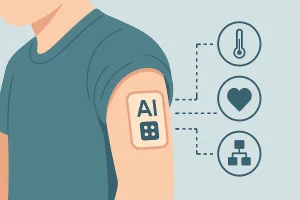
Remote healthcare is changing how people in the countryside get medical support without always travelling to a clinic. In small villages and farming regions, long distances and a lack of specialists make continuous care difficult. Intelligent wearables and connected sensors can help here, because they watch vital signs every day and send relevant information to doctors and nurses far away. This article explains how these tools work in rural remote medicine, which benefits they bring for chronic patients, and where the real limits and risks still are.

How AI Wearables Work In Rural Care
In rural regions, intelligent medical wearables act like small, always‑on monitoring stations on the patient’s body. Devices such as smartwatches, chest bands, or patches collect signals like heart rate, rhythm, blood pressure, oxygen saturation, movement, and sleep patterns during normal daily life. These measurements are sent through a phone or home router to secure platforms where software analyzes trends and looks for warning signals. Advanced models can detect irregular heart beats, rising risk of heart failure, or dangerous blood sugar patterns long before a crisis is visible to the patient. For people who live far from hospitals, this continuous observation replaces the need for frequent in‑person check‑ups and allows earlier interventions when something goes wrong. Many systems are linked to telemedicine portals, so a nurse or doctor can see dashboards, messages, and alerts and then decide if a video call or a clinic visit is needed.
Use Cases For Chronic Patients In Villages
In rural medicine, intelligent wearables are especially helpful for people with chronic diseases that need long‑term monitoring. Common conditions are hypertension, heart failure, arrhythmias, chronic lung disease, and diabetes, which often require careful tracking of vital signs and daily habits. For a farmer with heart failure, a patch that records ECG and breathing can warn the care team if fluid builds up or heart rhythm becomes unstable, even when the person is working in the field. For diabetes patients in small towns, continuous glucose monitors send blood sugar values to cloud platforms where algorithms identify dangerous trends and may suggest dose changes or lifestyle adjustments. Wearables that count steps and measure sleep can also support rehabilitation after a stroke or surgery, because the care team can see if the patient really follows the activity plan at home. Some programs in remote regions use connected oximeters and respiratory bands to follow people with chronic lung disease or post‑COVID problems, watching oxygen levels and breathing patterns and triggering early contact if values fall. Together, these use cases show that small devices on the body can extend the reach of rural health services far beyond the walls of clinics and practices.
Key Functions Of Medical Wearable Devices
In remote medicine, modern medical wearables combine different sensors with connectivity and analytic functions. They need to be robust enough for everyday life in rural settings and simple enough that patients can handle them without technical support every day. The table below shows some typical device types and their main roles in rural chronic care.
| Device Type | Core Sensors | Main Clinical Purpose | Typical Rural Scenario |
|---|---|---|---|
| Smartwatch / Band | Heart rate, movement, SpO2 | Detect arrhythmia, activity tracking | Older adult at home with cardiac risk |
| Patch ECG Monitor | Multi‑lead ECG, heart rate variability | Long‑term rhythm monitoring | Farmer with suspected atrial fibrillation |
| Continuous Glucose Sensor | Interstitial glucose | Detect hypo/hyperglycemia patterns | Village patient with type 1 or type 2 diabetes |
| Multisensor Chest Strap | ECG, respiration, temperature, activity | Early detection of deterioration | Chronic heart or lung disease in remote areas |
Many of these devices send data to smartphone apps that act as gateways and show simple feedback to the user, for example traffic‑light colors or short text hints. In some projects, edge devices in the home do the first layer of analysis locally to reduce the amount of data that must travel over weak rural networks. Cloud platforms then aggregate information over days and weeks, create risk scores, and highlight trends that might need action by clinicians. When integrated with electronic health records, this long‑term picture supports better decisions about medication and follow‑up visits.
Benefits For Rural Patients And Health Systems
For people living far from hospitals, intelligent wearables bring several concrete advantages. First, they reduce the number of long trips to clinics because many routine checks can be replaced by continuous monitoring and remote reviews. Second, early detection of deterioration means that acute episodes, such as heart failure decompensation or severe hypoglycemia, can often be prevented or treated earlier, which lowers the risk of emergency admissions. Third, data‑driven insights help doctors and nurses in understaffed rural systems to focus their limited time on patients with the highest current risk instead of first‑come, first‑served scheduling. Fourth, clear feedback from wearables can motivate patients to take a more active role in their own care, for example by walking more, adjusting diet, or taking medication more regularly.
- fewer long, expensive journeys to distant clinics
- earlier recognition of worsening health trends
- better use of scarce rural medical staff
- stronger patient engagement in self‑management
- more data to support treatment decisions over time
Several studies and pilot programs report improvements in quality of life and reductions in hospitalizations when remote monitoring is used correctly for chronic patients in underserved regions. At the same time, these benefits appear most clearly when technology is combined with clear workflows and human support, not when devices are just handed out without guidance.
Limits, Risks, And Practical Barriers
Even with all these advantages, intelligent wearables are not a simple answer to every rural health problem. Connectivity is one of the biggest practical barriers, because many villages still have patchy mobile coverage or slow internet, which can delay or block data transmission and alerts. To reduce this risk, some solutions use local storage and send only summaries once a connection is available, or they move more analytics to the edge so that at least basic warnings still appear on the phone or device. Digital literacy is another challenge, since many older rural residents or people with low tech exposure find it hard to pair devices, manage apps, or understand dashboards. Training by nurses, community health workers, and local champions, as well as simple, translated user interfaces, is necessary to avoid excluding exactly those patients who might benefit most.
There are also deeper concerns about privacy, ethics, and safety when sensitive health data from wearables are collected at large scale. Datasets must be stored securely, access must be limited, and people should get clear information about what is collected, how it is used, and when it is deleted. From a clinical perspective, algorithms can still make wrong predictions, for example because they were trained on urban populations with different lifestyles, or because incoming data are incomplete or noisy. False positives can create alert fatigue and stress for both patients and staff, while false negatives can build a wrong feeling of safety. Regulators and professional bodies therefore recommend that clinicians treat AI as decision support only and keep final responsibility for diagnosis and treatment with trained humans. Finally, if healthcare systems use remote monitoring as a reason to reduce face‑to‑face visits too much, subtle signs that can only be seen in direct contact may be missed, which is especially important in older or multi‑morbid patients.
Frequently Asked Questions
How Accurate Are These Devices For Rural Chronic Patients?
Most clinical‑grade wearable devices reach good accuracy for key vital signs in controlled studies, but performance in real‑life rural settings can vary with signal quality and correct wearing. For that reason, clinicians usually combine device readings with patient history and physical examinations rather than relying on sensor data alone.
What If Internet Access Is Very Unstable?
When connectivity is weak or irregular, many systems buffer measurements on the device or gateway and upload them in batches when a connection returns. For critical events, a safe design should still show warnings on the phone or local display, so that patients and families can react even if cloud services are temporarily unreachable.
How Is Privacy Protected With Continuous Monitoring?
Responsible remote monitoring platforms use strong encryption, strict access controls, and clear data‑retention rules to protect continuous health data streams. Rural patients and providers should ask vendors for transparent information about data flows, storage location, and options for consent withdrawal before starting a program.
Final Thoughts
Remote healthcare in rural regions becomes more realistic and resilient when continuous, intelligent monitoring is added to classic in‑person care. Small body‑worn devices can bring long‑term observation, earlier warnings, and more personalized treatment adjustments to people who live hours away from the next hospital. At the same time, these tools depend on solid connectivity, patient support, careful handling of privacy, and responsible use of algorithms, so they should be introduced step by step, not as a quick fix. The most promising path is a hybrid model where local caregivers, telemedicine, and intelligent wearables work together to make rural healthcare more continuous, fair, and human‑centered.
Sources
National Center for Biotechnology Information
Application of AI and Telemedicine in Rural Communities (2025)
JMIR mHealth and uHealth
Wearable Devices for Remote Monitoring of Chronic Diseases (2026)
International Journal of Applied Research in Social Sciences
AI-Enhanced Remote Monitoring for Chronic Disease Management in Rural Areas (2024)
Academiconlinejournals – MJETS
Smart Wearable Devices for Health Monitoring: A Focus on Rural Healthcare (2025)
IAPP – International Association of Privacy Professionals
The Digital Body: Rethinking Privacy and Security in Wearable Health Trackers (2025)